
Cut — 6 min read
Cutting Your Own Fade: The Guard Ladder
A fade is nothing more than a gradient built from progressively longer guards, blended where they meet. Do it in the right order with a mirror behind you and it is genuinely hard to ruin. Skip the blending passes and you get visible steps — the single most common self-cut tell.
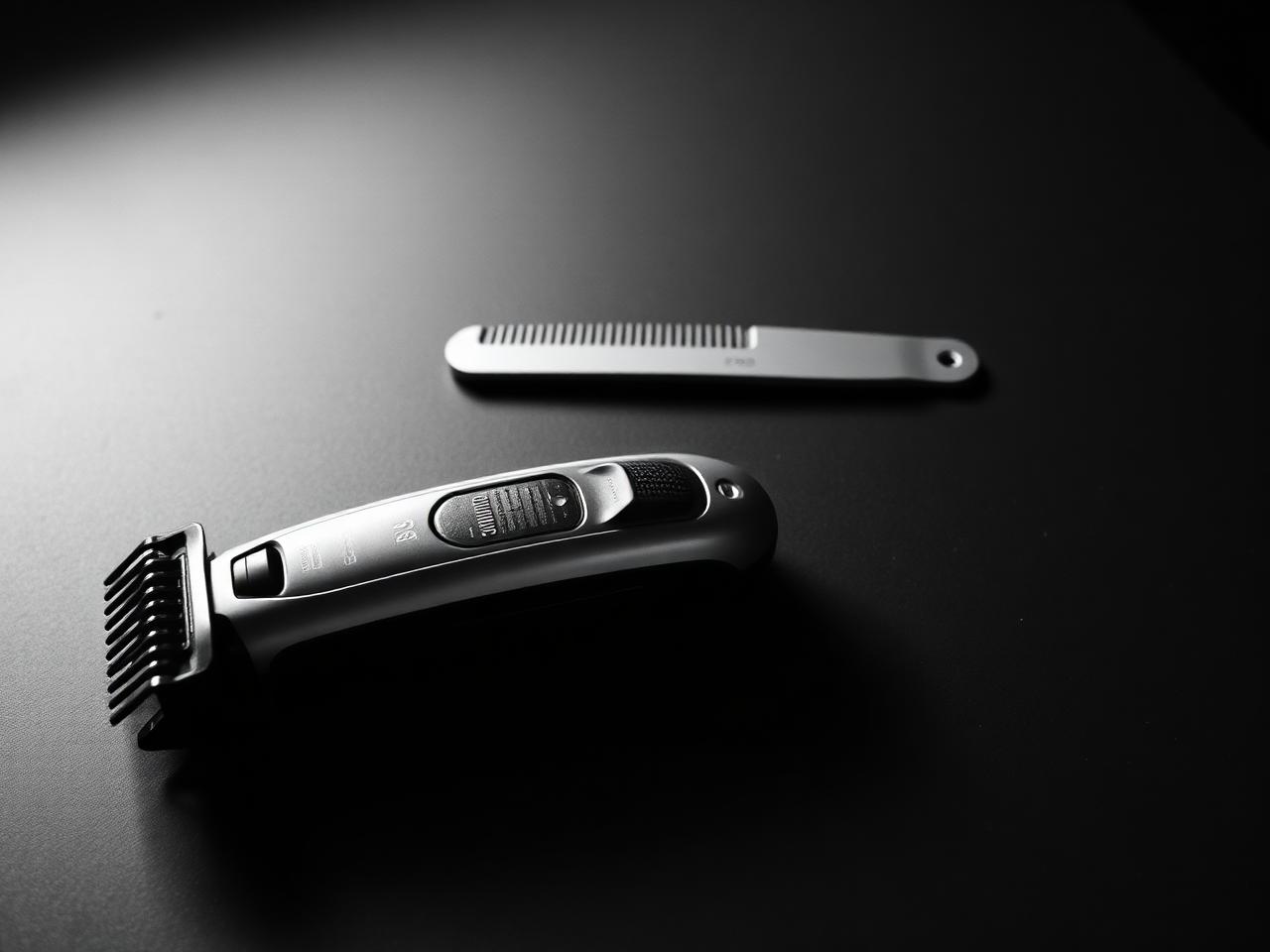
Set up properly
Cut on dry, clean, combed hair — wet hair sits longer than it dries, and you will take off more than you meant to.
Use a second mirror or your phone camera propped up behind you. Cutting the back blind is how uneven lines happen.
The guard ladder
For a standard mid fade, work bottom to top and never start shorter than you think you need. You can always go down a guard; you cannot go back up.
- 01Guard 1: from the hairline up to roughly one finger-width above the ear, all the way around.
- 02Guard 2: from the hairline up to about two fingers, flicking the clipper outward at the top of each pass.
- 03Guard 3: up to the temple corner, same flicking motion.
- 04Blend: run guard 2 over the line where 1 and 2 meet, then guard 3 over the 2-and-3 line, using only the flick-out motion.
- 05Top: leave it, or take length off with a comb and scissors — not clippers.
- 06Detail: trim the neckline and around the ears with a bare trimmer, following the natural hairline rather than inventing a straight one.
Maintenance
A fade holds its shape for about two weeks. Touch up the bottom two guards only — recutting the whole thing every week walks the fade up your head until there is nothing left.
Oil the blades after every cut. A dry blade pulls hair, and pulling is what makes home cuts hurt.